What are the benefits of the shipping line with Türkiye for Oman?
What are the benefits of the shipping line with Türkiye for Oman?
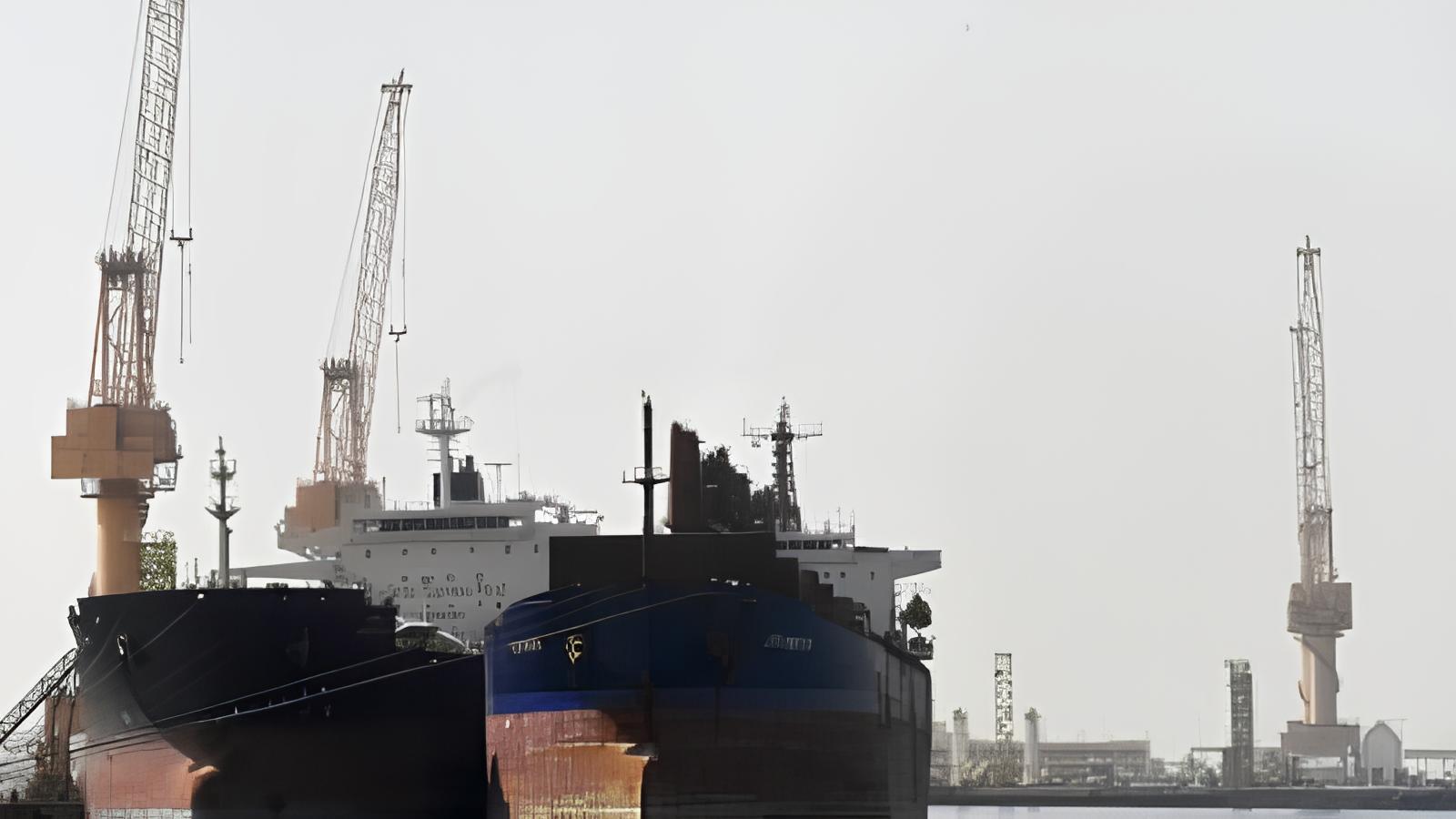
Turkey and Oman are exploring the establishment of a shipping line between them, a strategic initiative to deepen economic and trade ties between the two countries. This follows Turkish President Recep Tayyip Erdoğan's visit to Oman last October, reflecting shared ambitions to transform Omani ports into pivotal hubs for re-export and transit trade to Asia and Africa, while Turkey benefits from its strategic location as a gateway to Europe and Asia.
The project's impact on Omani citizens hinges on exploring the opportunities it offers in terms of prices, employment, and direct transport. Plans for the project began to take concrete shape after an official meeting between Oman's Minister of Commerce, Industry, and Investment Promotion, Qais bin Mohammed Al Yousef, and several Turkish officials, including Trade Minister Ömer Polat.
The project represents a significant turning point, as the Omani Ministry of Labor recently announced ambitious plans to create 600 new jobs in the Port of Salalah and related service companies by the end of 2025 alone, with 150 direct jobs at the port itself.
The increased maritime traffic resulting from the direct shipping line will mean a rise in demand for skilled labor across various specialties, from loaders and unloaders to logistics engineers, customs officials, and human resources personnel, according to a report by Muscat Daily. This new trend reflects a strong desire on both sides to capitalize on Oman's exceptional geographical location, which boasts three modern ports—Salalah, Sohar, and Duqm—and a sophisticated infrastructure capable of handling massive cargo volumes, as reported by the Oman News Agency.
In a broader economic context, the Omani-Turkish shipping line project presents an opportunity to provide Omani citizens with more affordable consumer goods, as direct shipping lines are already operational, according to international logistics experts quoted by Arabian Gulf Business Insight.
Furthermore, this shipping initiative with Turkey is part of a wider strategy to transform Omani ports into a regional trade hub, facilitating the flow of Turkish and European goods to Asian and African markets. Instead of relying on long, indirect shipping routes through multiple intermediary ports, Gulf consumers will benefit from faster and more efficient transport, saving both time and money, as two experts told Al-Araby Al-Jadeed.
Feasibility
In this context, economist Khalfan Al-Touqi believes that the idea of establishing a new maritime shipping line is currently in its initial stages and will not be implemented unless its economic feasibility is proven, especially if several Gulf states, though not necessarily all, participate, along with Turkey. He added that the line could later extend to Europe, as he told Al-Araby Al-Jadeed.
Al-Touqi added that it is currently impossible to determine the economic viability of this project without clarifying the details of the Gulf states' participation. However, he emphasized that if the project proves feasible, the benefits will be substantial. The proposed line would contribute to revitalizing and stimulating ports, particularly Omani ports, by strengthening their internal connectivity and linking them to an integrated global logistics system.
Furthermore, Oman's strategic geographical location gives it a significant competitive advantage, enabling it to become a major hub within international shipping routes. This would reduce costs for both traders and consumers and open up broader horizons for increasing Omani exports to vital markets such as China, India, and Central Asian countries, according to Al-Touqi's assessment.
Al-Touqi also explains that this maritime route would support the joint Gulf railway project, given its close logistical link to it. This would create new job opportunities in various sectors and significantly increase trade between Oman and the Gulf states, as well as between Oman, Turkey, and global markets.
Al-Touqi concludes that this trade initiative, if its economic viability is proven, will open new horizons for intra-regional trade among the participating countries and will have a positive impact on all countries in the region, particularly Oman and Turkey.
Transportation costs in Oman
The president of the International Association for Economic Policy Research, Recep Yorulmaz, tells Al-Araby Al-Jadeed that establishing a direct and regular maritime corridor between Oman and Turkey could bring tangible economic benefits to citizens in Oman and the Gulf Cooperation Council countries by reducing the costs of goods, improving job opportunities in ports, and facilitating trade. He points out that the basic mechanism for this effect lies in reducing the number of unloading and transport stages, shortening transit times, and increasing the reliability of schedules, which leads to a reduction in logistics costs and the uncertainty associated with them.
As a result, prices for a specific range of imported consumer goods and intermediate goods are decreasing, along with a significant increase in job opportunities in port operations and related logistics, according to Yorulmaz. He noted that most current cargo shipments pass through regional logistics hubs such as Jebel Ali or Port Said, adding extra stages of transport and adding three to six days due to unloading and waiting.
However, a direct weekly service between Omani ports such as Salalah, Sohar, and Duqm, and Turkish ports such as Mersin, Izmir, Gemlik, and Ambarli, reduces transit time between ports by 20–40%. For example, the sea voyage between Salalah and Mersin takes about 6–7 days, while current routes take 9–12 days after accounting for unloading, Yorulmaz explained.
He adds that the actual delivery cost will also decrease, as direct ships with a capacity of 1200–1800 containers allow avoidance of the cost of lifting containers at intermediate terminals and local transport fees, saving about $90–$150 per container.
This equates to a cost reduction of 1.8–6% for low-value goods and 0.5–1.5% for high-value goods, before accounting for the benefits of reduced waste or spoilage. When these factors are combined, Yorulmaz estimates an average cost reduction of 1–2% for a representative group of goods.
However, Yorulmaz points out that consumers do not immediately receive all of these savings; rather, 50–70% are passed on to retail prices within 6–12 months. This translates to a 0.5–1.4% decrease in the prices of directly affected goods, a reduction of particular importance for households and small businesses, as it is coupled with improved product availability and reduced stockouts.
In terms of employment, Yorulmaz explains that every additional thousand containers per year generates one direct job in ports, with the addition of two to three indirect jobs in sectors such as road transport, storage, maintenance, and shipping. Assuming that the new shipping lane achieves an additional flow of between 40,000 and 60,000 containers per year within two to three years, the employment impact will be as follows: 40–90 direct jobs and 80–200 indirect jobs, bringing the total to 120–290 new jobs.
Yayın Tarihi:
11 Ocak 2026